Wednesday, March 18, 2020

Percy Bassett, Pennsylvania Hall of Fame Boxer

https://www.inquirer.com/philly/hp/sports/20080516_Pennsylvania_Boxing_Hall_of_Fame_inductions.html

Pennsylvania Boxing Hall of Fame inductions


John Gallagher, chairman of the Pennsylvania Boxing Hall of Fame, didn't need much time to consider the question.
Is Sunday's group of inductees at Romano's Caterers the most accomplished ever to be enshrined at the same time?
"Oh, absolutely," Gallagher said of the eight-fighter, nine-member class that includes five former world champions. "You've got three heavyweight champs [Larry Holmes, Tim Witherspoon and the late Sonny Liston]. You've got an Olympic gold medalist [Meldrick Taylor] who won two world titles as a pro, and another fighter [Charles Brewer] who won a world title. And the other two inductees [Curtis Parker and the late Percy Bassett] both were world-rated at one time."
Joining this august group is the late Jack McKinney, who loved boxing and opera and managed to cover those seemingly disparate beats for the Daily News with skill and passion.
But while most of the attention at the awards dinner will be rightfully focused on the living inductees in attendance - Holmes, who also will be enshrined in the International Boxing Hall of Fame in Canastota, N.Y., on June 8, is out of the country and has sent his regrets - perhaps the most compelling, and tragic, story belongs to a man who has been dead since 1993, had his last bout in 1955 and never got a deserved shot at a world championship.
West Philadelphia native Percy Bassett's boxing legacy is not what it might have been because he never wore a jeweled belt around his waist. But his integrity, during a time when the sport was controlled by shadowy underworld figures, stamps him as a champion of another sort.
Bassett and his trainer, Quenzell McCall, paid dearly for not playing ball with the mob. Even if they might have been tempted to acquiesce at some point, Bassett's career prematurely ended when, after suffering a detached retina in a knockout victory over Seraphin Ferrer in Paris on April 24, 1955, he was deemed to be legally blind. He was just 25 at the time.
"The story that Quenzell McCall told me was that they would have had to give up half of Percy's contract to [mobster] Frankie Carbo to get a shot at the title," longtime Philadelphia promoter J Russell Peltz said. "They refused to do it. That's why they kept putting Percy in all those eliminators until Teddy 'Redtop' Davis beat him again [on Nov. 26, 1954].
"When Percy suffered that detached retina, that was it. In those days, you couldn't get a detached retina repaired like you can now."
How good was Bassett? After turning pro with a second-round knockout of Tommy Trout on Oct. 16, 1947, he sprinted to a 50-2 record, with 29 victories inside the distance, in fewer than 4 years. Bassett was a boxer-puncher, skilled enough to dance along with the cuties, powerful enough to swap bombs with the blasters.
"Percy would have had a good shot to knock out Sandy Saddler," Peltz said. "He beat Ray Famechon for the interim [featherweight] title in 1953, when Saddler was in the Army."
Saddler, ironically, retired in 1956 because of vision problems stemming from injuries he suffered in an automobile accident.
If his own stalled ambitions weren't discouraging enough, Bassett (65-12-1, 42 KOs) also spent the last portion of his career haunted by memories of the death of one of his opponents. In a bout against Sonny Boy West on Dec. 20, 1950, West began to complain of double vision between the sixth and seventh rounds. Floored in the seventh round by a Bassett body shot, West landed hard on his head. He died the next day of an intercerebral hemorrhage.

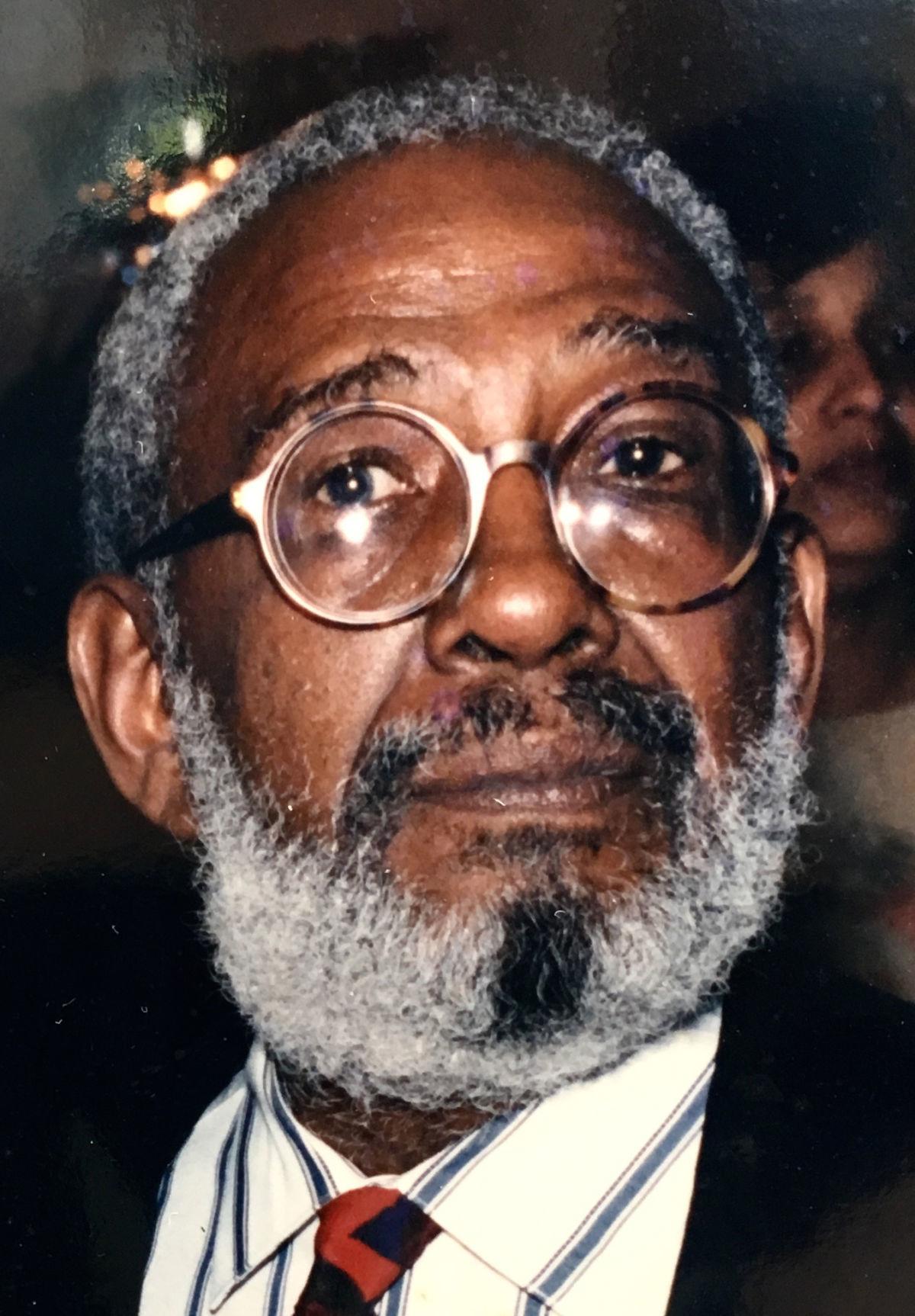
Cyrus Wiley, Noted Educator

http://valdostamuseum.com/wp-content/uploads/2018/09/Jan-Feb-Mar-2015.pdf

Derek Walcott, Nobel Prize Recipient in Literature

*Derek Walcott, the 1992 recipient of the Nobel Prize in Literature, was born in Castries, Saint Lucia.

Derek Alton Walcott (b. January 23, 1930, Castries, Saint Lucia - d. March 17, 2017, Cap Estate, Saint Lucia) was a West Indian poet and playwright noted for works that explore the Caribbean cultural experience. He received the Nobel Prize for Literature in 1992.
Walcott was educated at St. Mary's College in Saint Lucia and at the University of the West Indies in Jamaica. He began writing poetry at an early age, taught at schools in Saint Lucia and Grenada, and contributed articles and reviews to periodicals in Trinidad and Jamaica. Productions of his plays began in Saint Lucia in 1950, and he studied theater in New York City in 1958–59. He lived thereafter in Trinidad and the United States, teaching for part of the year at Boston University. 
Walcott was best known for his poetry, beginning with In a Green Night: Poems 1948–1960 (1962). This book is typical of his early poetry in its celebration of the Caribbean landscape’s natural beauty. The verse in Selected Poems (1964), The Castaway (1965), and The Gulf (1969) is similarly lush in style and incantatory in mood as Walcott expresses his feelings of personal isolation, caught between his European cultural orientation and the black folk cultures of his native Caribbean. Another Life (1973) is a book-length autobiographical poem. In Sea Grapes (1976) and The Star-Apple Kingdom (1979), Walcott uses a tenser, more economical style to examine the deep cultural divisions of language and race in the Caribbean. The Fortunate Traveller (1981) and Midsummer (1984) explore his own situation as a black writer in America who has become increasingly estranged from his Caribbean homeland.
Walcott’s Collected Poems, 1948–1984, was published in 1986. In his book-length poem Omeros (1990), he retells the dramas of Homer's Iliad and Odyssey in a 20th-century Caribbean setting. The poems in The Bounty (1997) are mostly devoted to Walcott’s Caribbean home and the death of his mother. In 2000 Walcott published Tiepolo’s Hound, a poetic biography of West Indian-born French painter Camille Pisarro with autobiographical references and reproductions of Walcott’s paintings. (The latter are mostly watercolors of island scenes. Walcott’s father had been a visual artist, and the poet began painting early on.) The book-length poem The Prodigal (2004), its setting shifting between Europe and North America, explores the nature of identity and exile. Selected Poems, a collection of poetry from across Walcott’s career, appeared in 2007. Aging is a central theme in White Egrets (2010), a volume of new poems.
Of Walcott’s approximately 30 plays, the best-known are Dream on Monkey Mountain (produced 1967), a West Indian’s quest to claim his identity and his heritage; Ti-Jean and His Brothers (1958), based on a West Indian folktale about brothers who seek to overpower the Devil; and Pantomime (1978), an exploration of colonial relationships through the Robinson Crusoe story. The Odyssey: A Stage Version appeared in 1993. Many of Walcott’s plays make use of themes from black folk culture in the Caribbean.
The essays in What the Twilight Says (1998) are literary criticism.  They examine such subjects as the intersection of literature and politics and the art of translation.

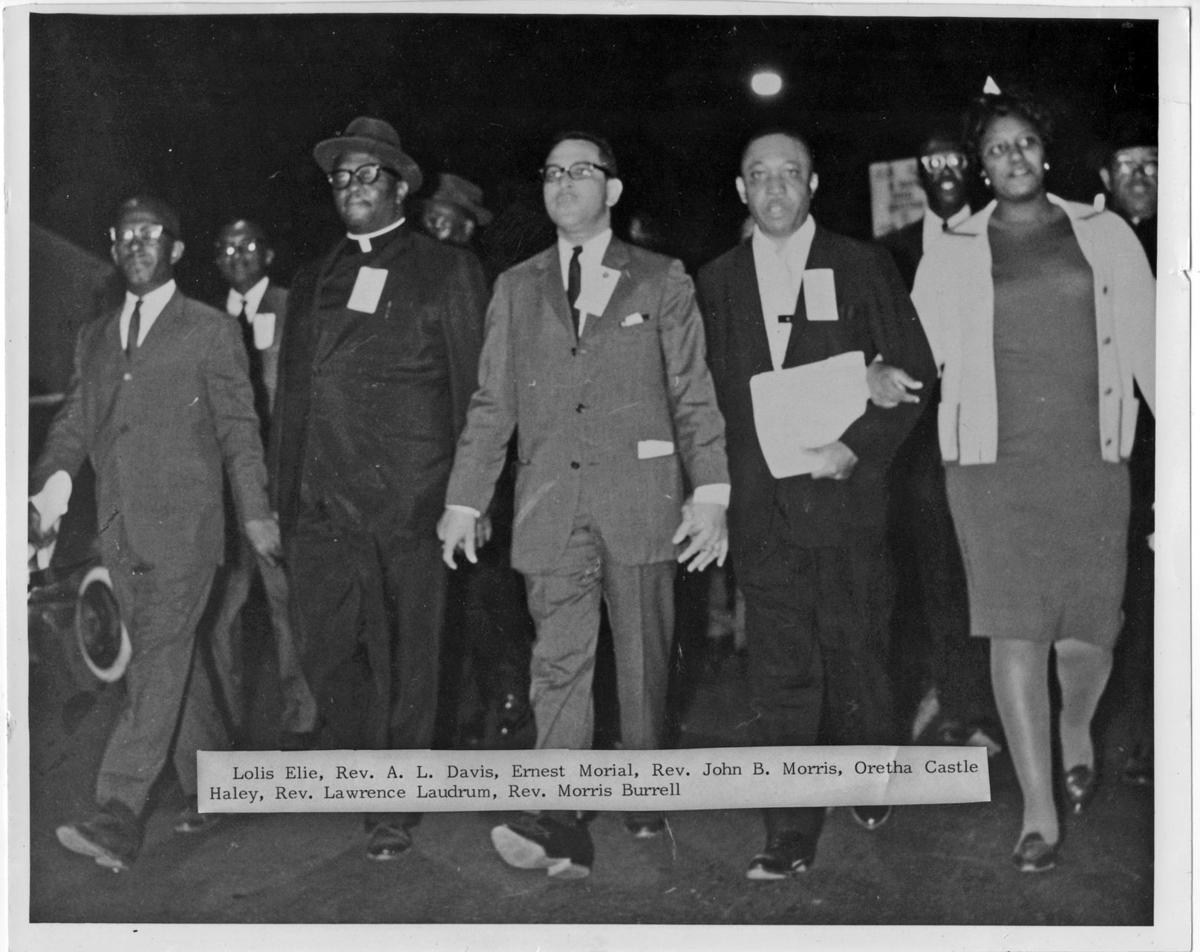
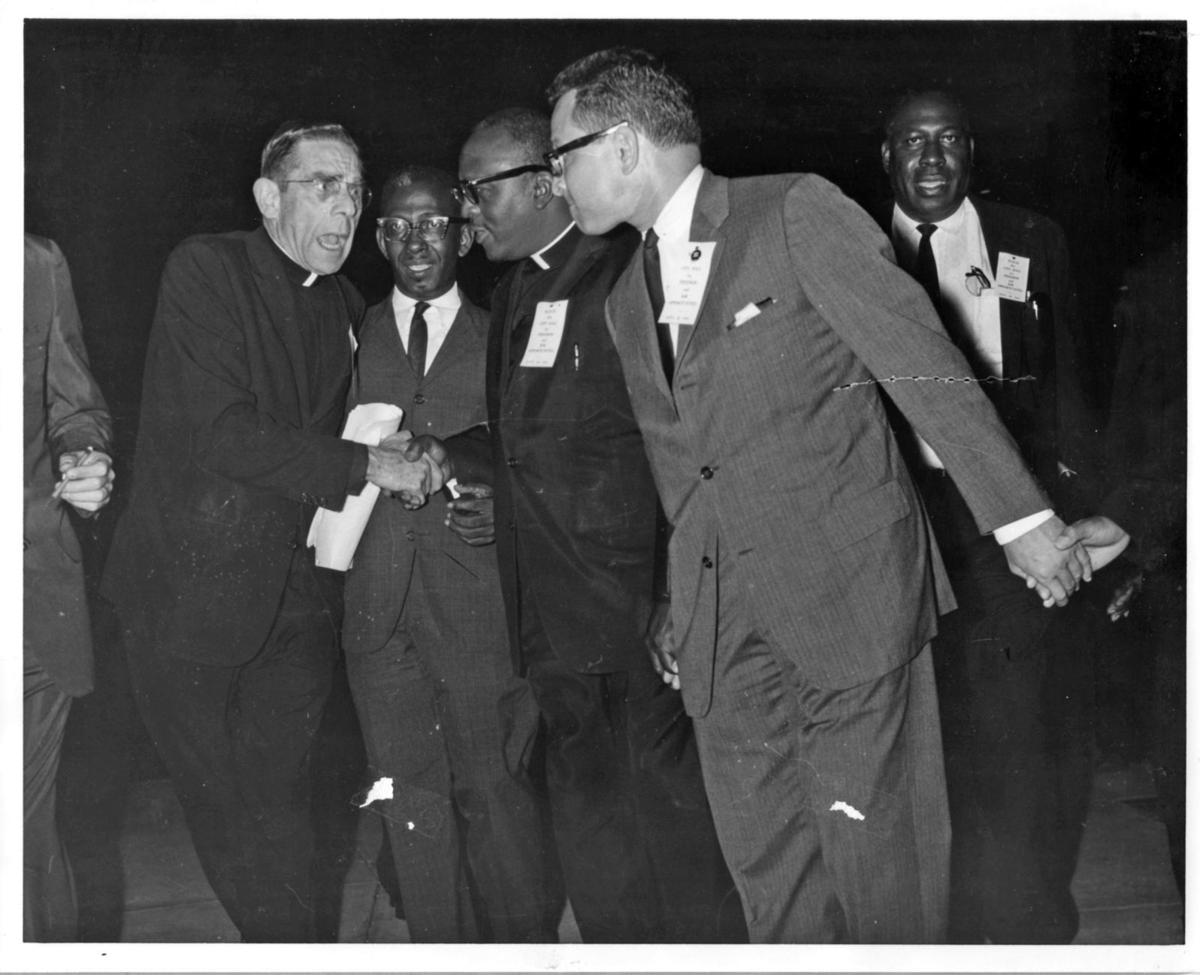
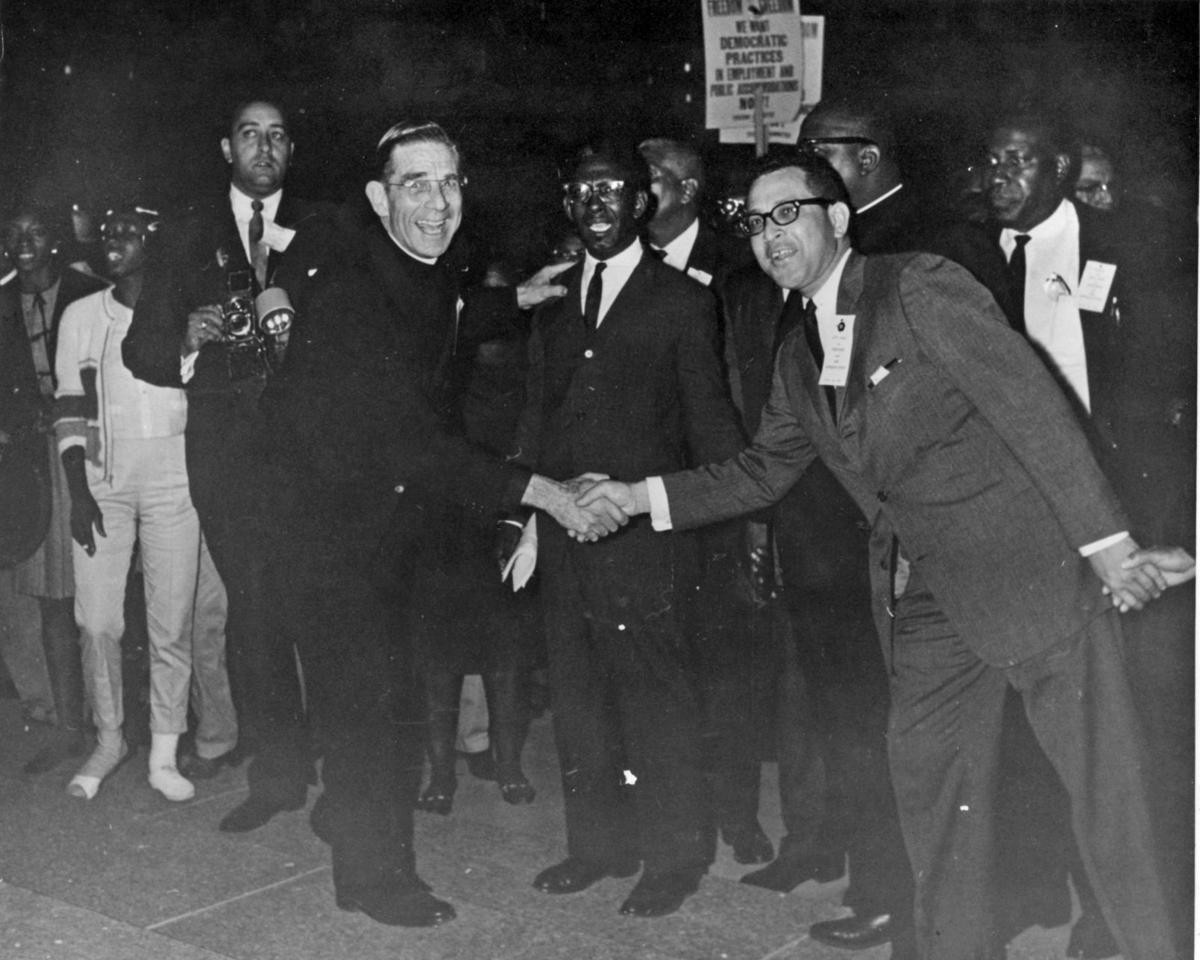
Lolis Edward Elie, Civil Rights Lawyer Who Helped Desegregate New Orleans

https://www.nola.com/news/article_0648eed6-4b90-5b5d-837f-34706ba6a96e.html

Lolis Edward Elie, longtime New Orleans civil rights attorney, dies at 87 (or 89)

  •  
  •  
  •  
  •  3 min to read
Prominent New Orleans civil rights lawyer Lolis Edward Elie died Tuesday at his home in Treme.
He was 87, according to his own accounts, which maintained that he was born in January 1930, though his birth certificate placed it in February 1928, said his son, writer Lolis Eric Elie.
Elie’s client list during the 1960s read like a who’s who of important civil rights figures in the state: Freedom Riders protesting segregation at bus stations across the South; the armed Deacons of Defense, who clashed with the Ku Klux Klan in Bogalusa; civil rights protesters in Plaquemine and other cities; members of the Congress of Racial Equality in New Orleans; and others.
His son heard from fellow writer Randy Fertel that his father had desegregated the Fertel family's restaurant, Ruth’s Chris Steak House, on North Broad Street. As the story went, Elie was eating at Ruth’s Chris with a judge who was trying to curry favor for an upcoming election. Another customer gestured at Elie and told restaurateur Ruth Fertel, “If you’re going to serve him, I’m leaving.” To which she replied, “Bye.”
Elie also represented Ernest “Dutch” Morial, who would become the city’s first African-American mayor, when Morial ran for a state legislative seat in 1967 and an opponent questioned his residency within the district.
Mayor Moon Landrieu, who hired an integrated staff after his election in 1970, a first for New Orleans, described Elie as one of his closest advisers and teachers.
During the 50 years that Elie practiced law, he was central to Louisiana’s civil rights movement, said retired Judge Calvin Johnson, who is now City Hall’s criminal justice commissioner. “If those of us whom he represented are like spokes on a wheel, Lolis was the fulcrum on that wheel,” Johnson said.
The two met when Johnson was 16, after an evening of protests that Elie would describe later as the scariest night of his life. Following a peaceful march in Plaquemine for civic reforms, police rode in on horseback to arrest and chase protesters, spraying them with tear gas and fire hoses and beating them with cattle prods and billy clubs.
Afterward, Johnson saw his lawyer walk into court and felt instant admiration for him. “The way he walked. The way he talked. The way this black man talked to this white judge. All of that. I fell in love with him. I wanted to be like Lolis,” Johnson said.
Elie grew up in New Orleans, became a merchant seaman after high school and ended up in New York City, where he worked odd jobs, saw shows at the Apollo Theater and heard some of the jazz greats of the time.
He was drafted into the Army and sent to California, where he was trained as a clerk. Afterward, he attended Howard University, then transferred home to Dillard University, where he helped to organize a sizable student chapter of the NAACP. It was suspended in 1956 after the Legislature required civil rights groups to publicly reveal their membership lists, putting members at risk.
In 1959, Elie received his law degree from Loyola University law school, got an office on Dryades Street and opened what become the legendary firm of Collins, Douglas & Elie with Loyola classmate Nils Douglas and Robert Collins, who had graduated from the LSU law school.
In April 1960, Elie became pro bono counsel for the Consumers’ League, whose leaders included the Rev. Avery Alexander and the Rev. A.L. Davis, as the group led a successful campaign on Dryades Street, where most shoppers were black. The boycott forced white merchants for the first time to hire black workers above the “mop and broom” level.
Later that year, Elie and his partners defended four student protesters: Rudy Lombard of Xavier University, Oretha Castle of Southern University at New Orleans, Cecil Carter Jr. of Dillard University and Lanny Goldfinch of Tulane University, all members of CORE.
The so-called “CORE Four” were arrested in September 1960 after a sit-in at the all-white lunch counter inside the McCrory’s store on Canal Street. Charged with criminal anarchy, the students faced possible 10-year prison sentences.
Elie and his partners successfully appealed the case, Lombard v. Louisiana, all the way to the U.S. Supreme Court, where lawyer Jack Nelson argued the case. In 1963, the high court threw out the arrests.
In the mid-1960s, Elie testified at a hearing about out-of-state lawyer Richard Sobol’s prosecution for representing a defendant in a controversial Plaquemines Parish murder case despite the state’s ban on non-Louisiana attorneys in criminal cases.
Lawyer Anthony Amsterdam, now a New York University School of Law professor, recalled that, on cross-examination, the prosecutor asked, “Mr. Elie, is it not true that the condition of Negroes in the state of Louisiana has improved during the past five years?”
Elie answered, “Yes, but …” and continued on to give a two-hour answer that Amsterdam described as “easily the finest, most fiery civil rights speech I have ever heard.” Enrapt judges did not even call the usual break for lunchtime because Elie was in the middle of his answer, Amsterdam said.
Elie’s list of accomplishments, cases and clients “goes on and on and on,” Johnson said. “He is so much a part of the progress that we have made as a city, state and country, coming from the places we were.”
Besides his son, survivors include a daughter, Dr. Migel Elizabeth Elie; three grandchildren; and three great-grandchildren.
Visitation will be held from 4 to 7 p.m. on Friday at Rhodes Funeral Home, 3933 Washington Ave. It will resume and at 8:30 a.m. Saturday at St. Augustine Catholic Church, 1210 Gov. Nicholls St., until the funeral service begins at 10:30 a.m. 

Charles Adams, Korean War POW Who Chose China over America

https://www.scmp.com/magazines/post-magazine/article/1955111/why-american-pow-chose-maos-china-over-home